


Compared to arthrosis of the hip joint or knees, classic arthrosis of the shoulder joint is quite rare, but the symptoms of this disease can cause serious discomfort to the patient, so it requires complex treatment.Shoulder arthrosis (oarthrosis) is most often diagnosed in patients over the age of fifty.Its development is associated with a deterioration in the quality of the cartilage tissue that covers the surfaces of the joints.Cartilage acts as a shock absorber;thanks to it, the individual bone components slide optimally inside the shoulder joint.When the cartilage thins and its integrity is broken, the bones in the joint begin to contact each other.It is a painful process that leads to limited mobility of the joint.The progression of the disease causes the formation of osteophytes - abnormal growth of bone tissue at the edges of the shoulder joint.
Reasons for the development of arthrosis of the shoulder joint
In the majority of cases, arthrosis of the shoulder joint develops with age due to the natural wear and tear of the joint.After all, such a part of the body is a rather complex structure;if it is regularly subjected to severe stress, the likelihood of pathological changes increases.
There are cases when arthrosis of the shoulder joint appears in younger people.A similar situation is possible if the cartilage tissue was damaged in an accident (bad fall, traffic accident, etc.).If a person does not receive proper treatment after an injury, the cartilage is not used properly and this can lead to osteoarthritis.
Sometimes the loss of cartilage tissue in the shoulder joint is the result of systemic diseases, for example, rheumatoid arthritis, etc.
Symptoms

There are several typical symptoms of shoulder arthrosis.Among them:
- pain in the shoulder, especially when starting to move;
- morning stiffness, as well as restriction of movement after prolonged "inactivity";
- a popping, clicking, or rubbing sensation in the shoulder joint when moving;
- limited mobility of the shoulder joint, which is progressive.
Sometimes the pain due to arthrosis of the shoulder joint appears only after prolonged stress in this area.The intensity of the symptoms of the disease, as well as their combination with each other, may differ in different patients.However, pain, as a rule, remains a stable symptom of the disease.
If you ignore the unpleasant symptoms, your hand will hurt even more and the disease will progress.The joint cavity will narrow to a minimum and the inflammatory process will begin.In such a situation, the patient will be worried about more obvious symptoms of the disease:
- swelling of the joint;
- severe persistent pain;
- forced limitation of movements (up to complete immobility of the joint).
The prolonged course of the disease can lead to muscle atrophy due to refusal of usual activities.In such a situation, only surgery will help to deal with the disease.
Treatment
Unfortunately, the wear and tear of cartilage tissue is an irreversible process.If arthrosis of the shoulder joint is in an early stage of development, the symptoms are transitory and mild, the patient with arthrosis of the shoulder joint is recommended conservative treatment aimed at restoring the functions of the joint.Typically, therapy includes:
- limiting activity and cooling the joint until the inflammation is removed;
- the use of NSAIDs (non-steroidal anti-inflammatory drugs) to relieve pain and inflammation;
- use of hormonal drugs for intra-articular administration (if the above drugs do not give the expected effect).
After suppressing the inflammatory process, the treatment of arthrosis usually includes:
- massages;
- regular gymnastics (physical therapy);
- physiotherapy procedures (shock wave therapy, laser therapy, myostimulation, phonophoresis, ozone therapy, etc.).
Also, patients with arthrosis of the shoulder joint are usually prescribed drugs that are designed to stimulate the recovery of cartilage tissue.These are chondroprotective drugs.
Modern methods of conservative treatment of arthrosis of the shoulder joint
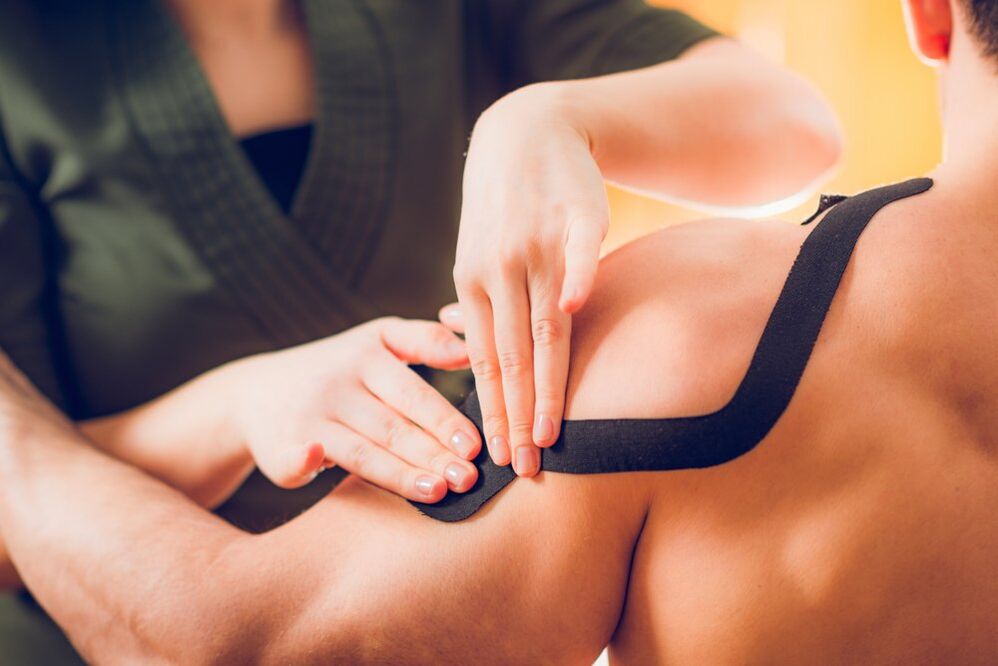
To treat destructive processes in the cartilaginous joint, doctors can use several new techniques.
Autoplasmotherapy
In this intervention, the patient is injected with his own platelet-rich plasma.It is believed that those growth factors that are present in platelets are able to stimulate the activity of fibroblasts - the production of collagen, hyaluronic acid and elastin.Thanks to this process, a new intercellular matrix is built and small blood vessels grow, which in turn helps restore metabolism, activate local immunity, improve microcirculation and normalize tissue respiration.According to doctors, autoplasma therapy allows the full functioning of the synovial membrane of the joint to begin, reduce the severity of pain and increase the range of motion in the joint.
Intra-articular injections with hyaluronic acid
The effectiveness of hyaluronic acid of non-animal origin in omarthrosis is still being studied by world scientists.In 2019, an article was published by American specialists (Department of Orthopedic Surgery, University of Arizona College of Medicine, Phoenix, Arizona, USA) describing the results of a preliminary study of the effectiveness of this procedure.It has been found that hyaluronic acid can reduce the intensity of pain for more than six months and increase the range of motion of the affected joint.
When is surgery necessary?
If the conservative treatment of arthrosis of the shoulder joint does not lead to the expected result and the symptoms of the disease significantly worsen the patient's quality of life, doctors may suggest an operation to restore the activity of the affected area.Today, endoprosthesis - the installation of an artificial joint (bioprosthesis) - can cope with this problem.This is a relatively new type of surgical intervention that allows you to completely eliminate the problem of arthrosis: restore the function of the joint and the entire upper limb, neutralize painful sensations and preserve work ability as much as possible.